
Gardeners grow social belonging (and lenga lenga) at Woodside urban farm
Common Roots Woodside invites people from all walks of life
This is the third story in a series about community gardening in Dartmouth. (Part I, Part II, and Part IV)
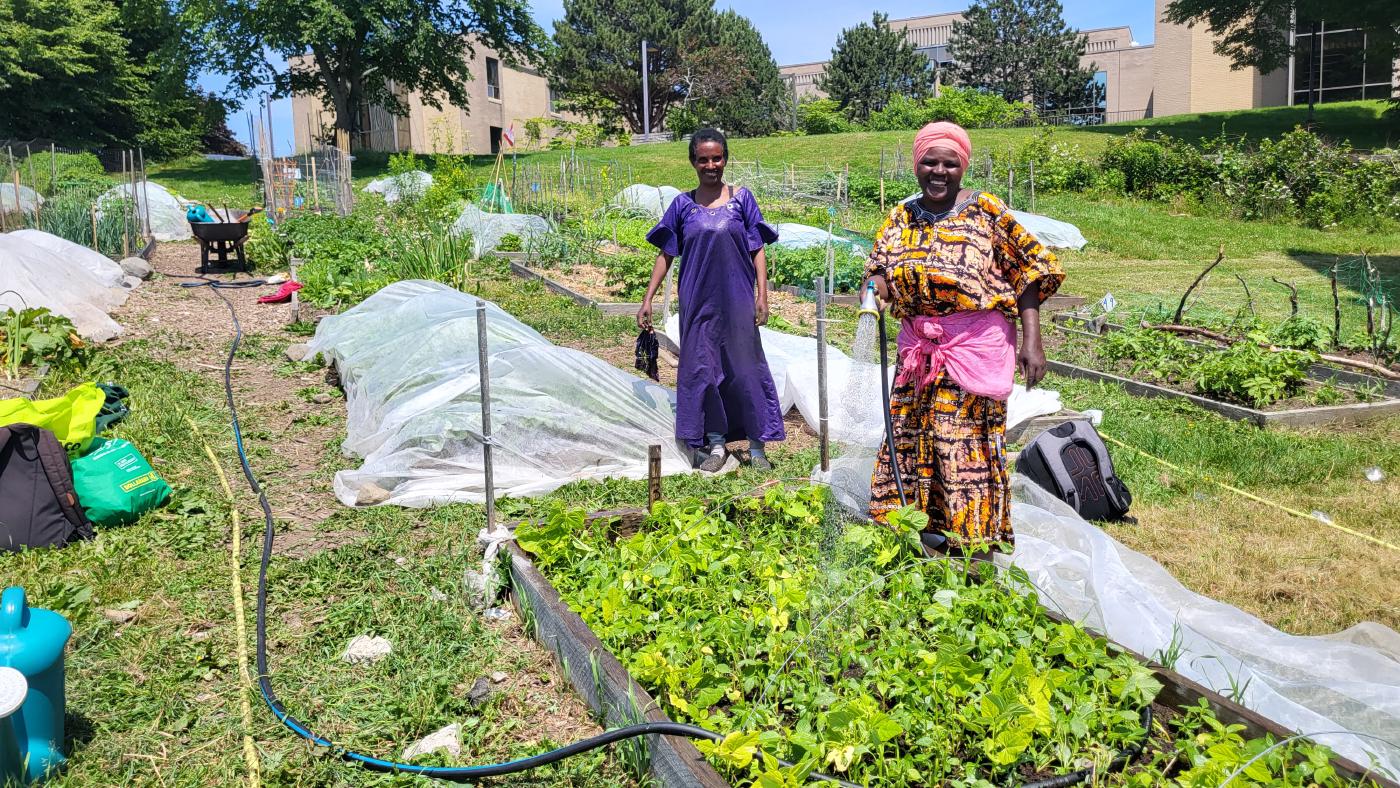
Just off the Dartmouth Harbourfront Trail and behind the Nova Scotia Hospital, Common Roots Urban Farm Woodside offers space to garden and opportunities to connect — for hospital staff, patients, community members, and people from all around the world. The farm has been at this location since 2015.
Nicola Nemy is the manager of the Woodside farm, and she told the Post that a large part of Common Roots is social belonging.
“A lot of the work that the farm does is grow and share vegetables, … but really a huge part of the work is social connection and having a space for people to meet each other,” she said.
The farm invites this social connection through its community garden plots, volunteer opportunities, and programming. Common Roots also supports newcomers and immigrants by offering subsidized garden plots and a space to grow foods from other cultures.
“It’s a very peaceful, calm place, but sometimes it’s a very busy place as well,” said Nemy.
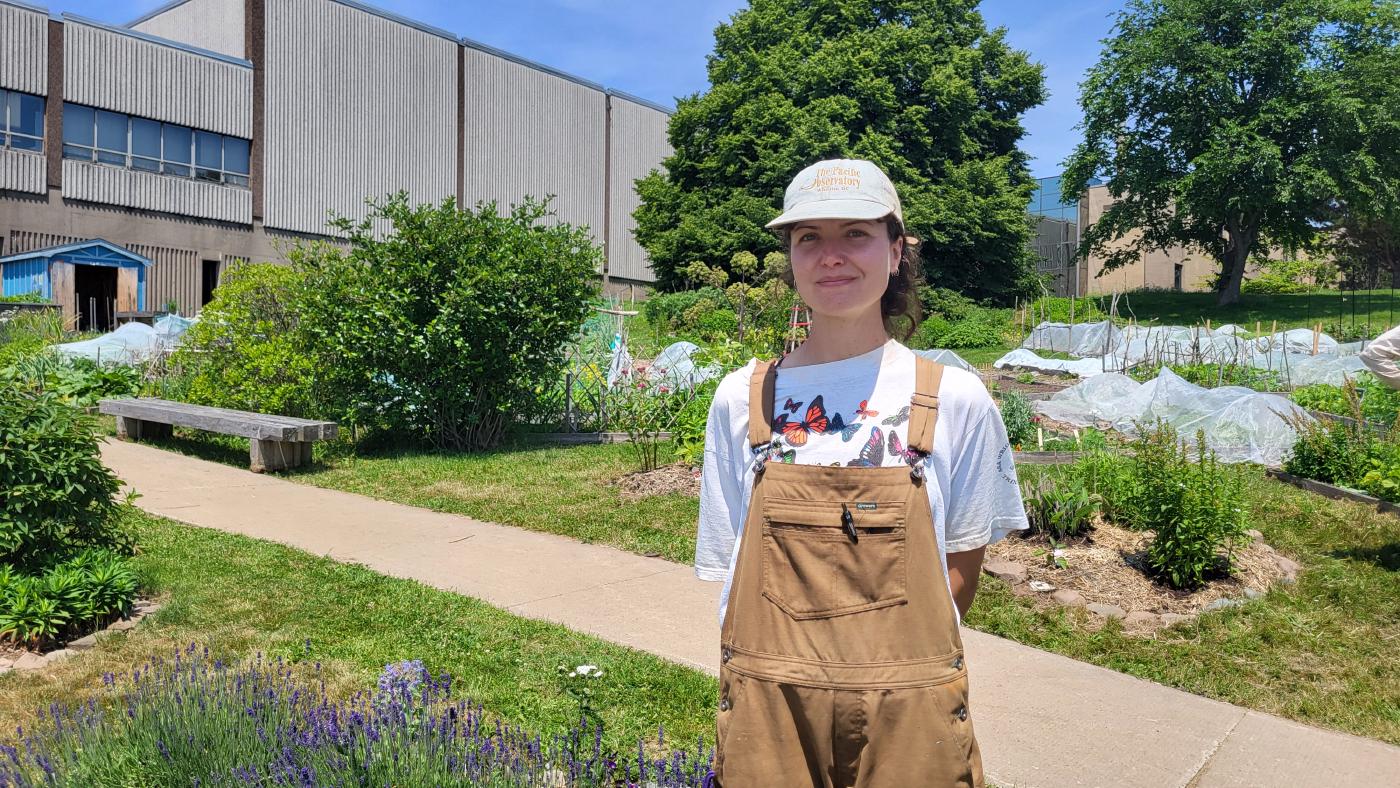
The Woodside farm is surprisingly large: there are over 100 plots for community members, 25 common plots, and a teaching garden of about 100 beds.
Nemy said over half of the community garden plots on the farm are used by newcomers, immigrants, and refugees.
Growing space for newcomers
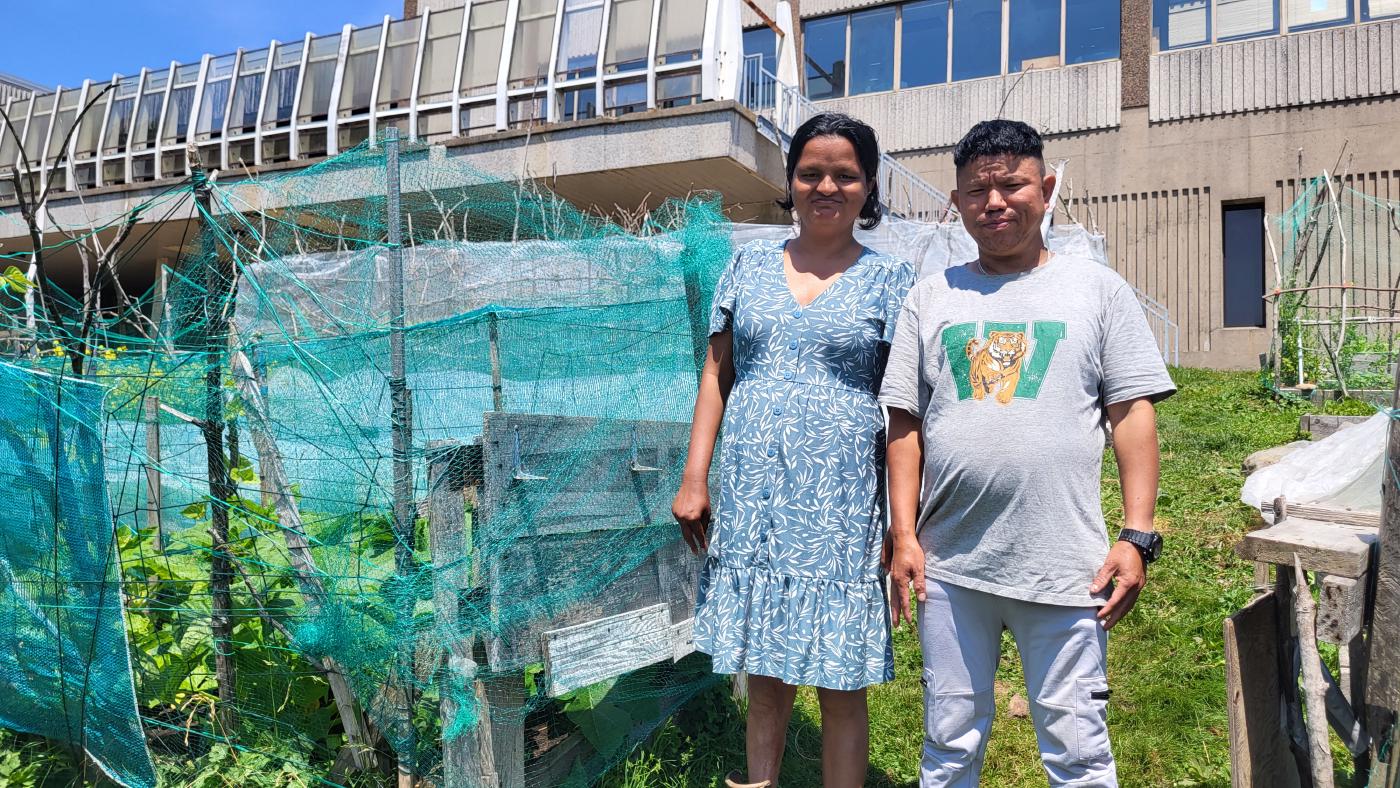
Lila Bhandari and Prem Magar travel over an hour most days to visit their plots at the Woodside garden.
Bhandari and Magar are both from Nepal. Bhandari came to Canada about 14 years ago, and Magar arrived about 9 years ago. They met in Canada and are now married.
Together, they have several garden plots. Among their crops are potatoes, pumpkins, tomatoes, beans, eggplants, and mustard greens.
Bhandari said they grow a lot of mustard because other Nepali people in their community wanted to buy it.
Bhandari and Magar also grow food at another community garden closer to their home in Halifax.
Bhandari said that they enjoy gardening sometimes, but challenges at the plots can make it difficult. For example, they’ve had to protect against deer coming in and eating their plants.
Still, Bhandari said they keep gardening because it helps with their health, including mental health. Bhandari said that when they stay at home too much, there is “too much thinking, too much not good feeling.”
Nemy said there are people gardening in Woodside from Nepal, Bhutan, Burundi, the Congo, Syria, and across the globe.
Many of these gardeners live around Clayton Park and Fairview in Halifax and have garden plots at more than one community garden in the city. Nemy said it is normal for gardeners to have plots in four or five gardens across the city.
Nemy said many of the gardeners’ home communities have a lot of farming knowledge. Some people would have had large gardens and grown most of their own food in the past. Now living in Halifax, many don’t have access to space for growing food near their homes.
There are also some foods they can’t find in stores in the city.
Nemy said cilantro and mustard greens are very popular among the gardeners. Lenga Lenga is another common plant. It is a type of amaranth grain, and people cook the leaves to eat them.
Nemy said Common Roots staff has learned a lot from community members about what can grow in this climate. They try to grow more of the same plants as community members in the common farm plots. This allows members to enjoy more of these plants and for those unfamiliar with the plants to learn about them.
“They are amazing, amazing gardeners,” said Nemy, referring to the gardeners from other countries. “They use every inch of space, and I say that they are farming in their plots more than they are gardening in them.”
Farming for community
On top of the regular gardeners who tend to their plots, the farm sees activity during weekly programming, volunteer shifts throughout the week, and group visits from schools or camps.
To help engage the public, they have a number of common plots and a teaching garden that produces food for the community. The common plots are located by the pathway in the centre of the farm and are open for anyone to enjoy. These plots have mostly perennial herbs, fruit trees, and berries available for people to pick.
The teaching garden is used for in-ground plants like zucchini, cucumber, squash, garlic, and some herbs. Most of the food they harvest from these beds goes to a shelf at the centre of the farm for anyone to take. Some food and flowers are sent to hospital units, and when they have an excess, they donate the food to nearby community fridges.
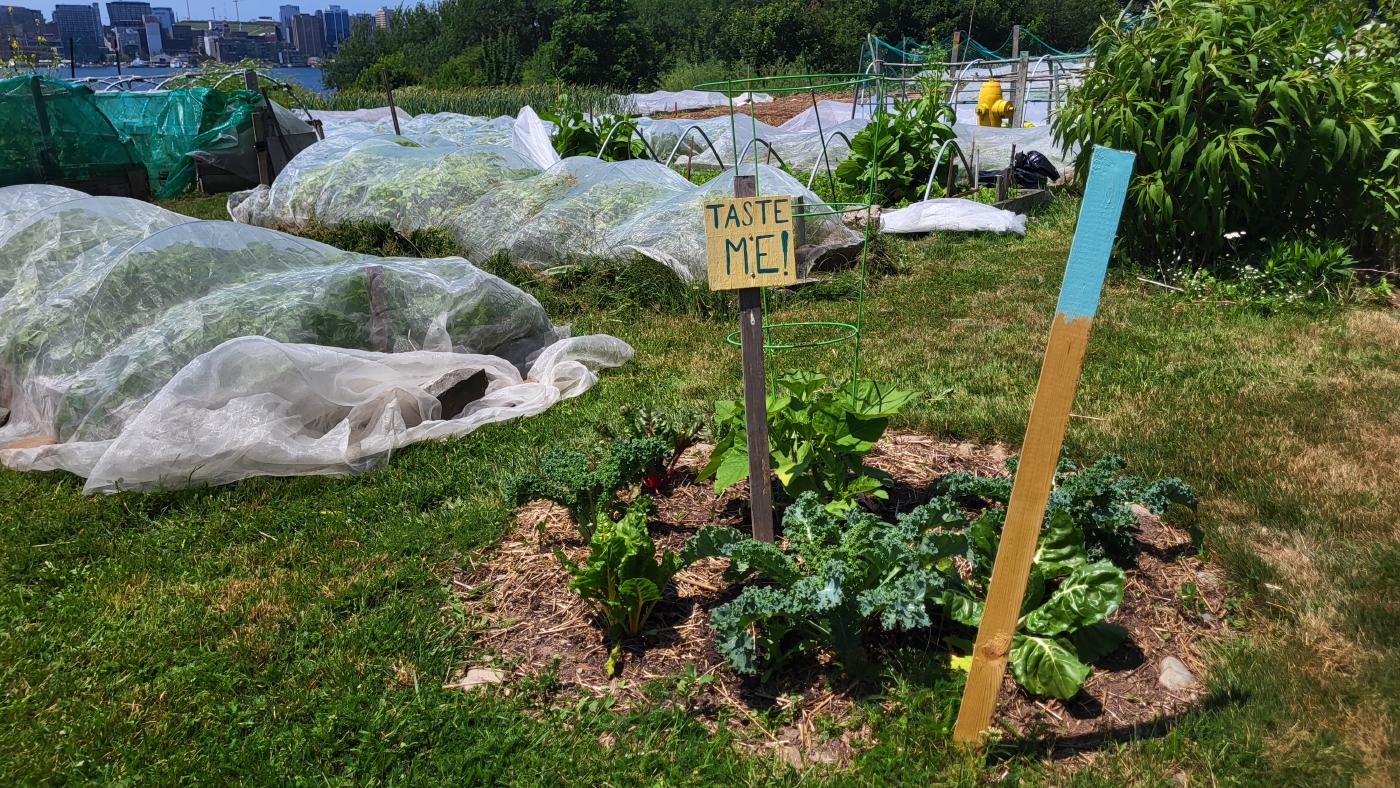
Nemy said the food donations are one way the farm gives back to the community.
“It’s going to the gardeners. It’s going to people visiting, or patients at the hospital, or people that are just walking through,” Nemy said. “We’re so close to NSCC that often students are coming by to catch the ferry.”
Another way the farm engages the community is through the farm’s relationship with the hospital. Nemy said that most of the hospital units have a garden plot and come outside for weekly programming.
“They come down from the hospital in a group and we do some gardening in their plot together,” Nemy said. “It’s really nice that they have access to this — just a welcoming, beautiful sort of healing space right here.”
Nemy runs a pre-employment program at the farm that gives hospital patients to opportunity to spend a few hours gardening, to practice routines, and to gain skills for the workforce.
Alongside the practical employment and garden skills that patients can learn through their programming, it’s also a chance to “come and interact with people and form relationships and friendships.”
“It’s almost like those other things are more important sometimes,” she said.
Although the farm will need to relocate due to a planned demolition near the site, Nemy said they are on good terms with the hospital.
“Today, the relationship with the hospital is really fabulous because we have this thriving, beautiful urban space.”
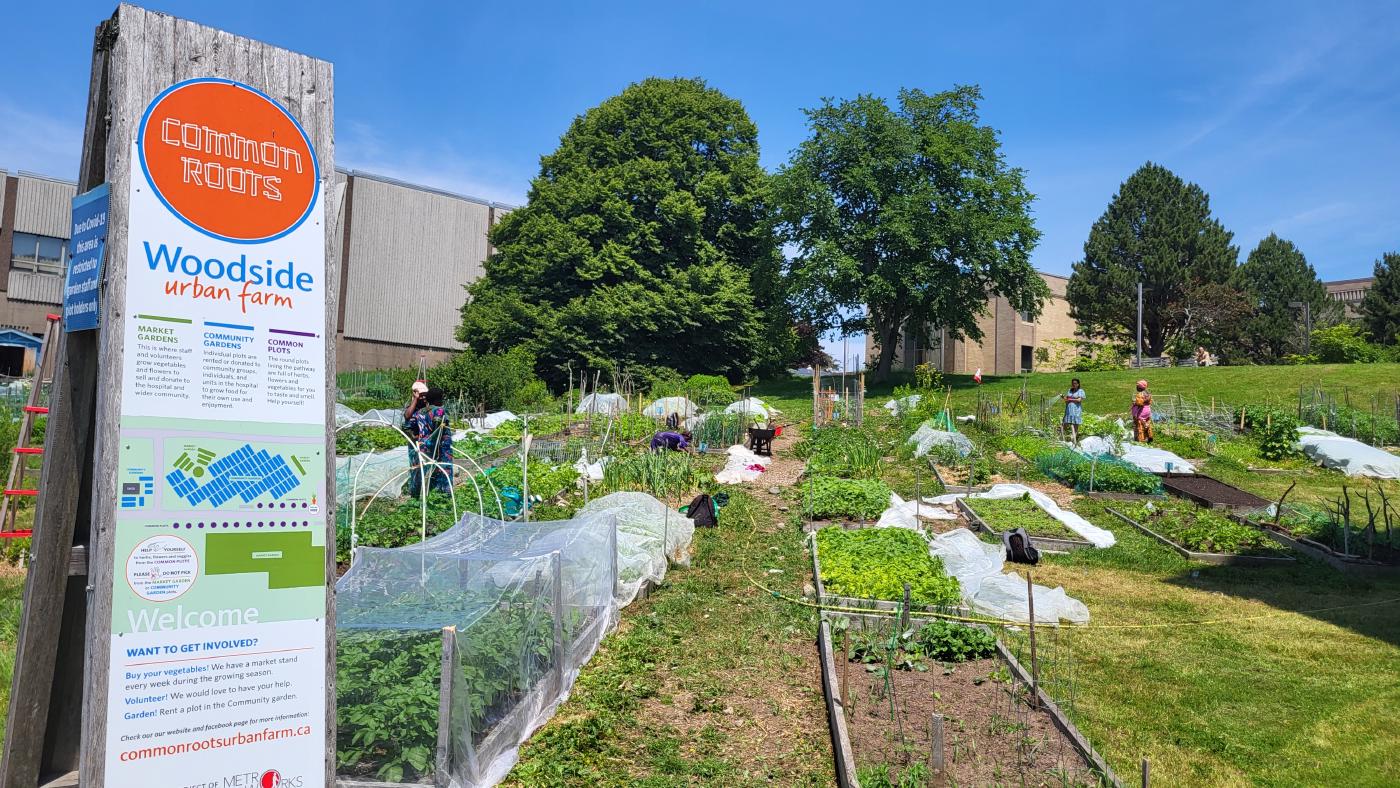
From hospital patients, workers, and students, to volunteers and newcomers — Nemy said the Woodside farm is there for anyone to visit and enjoy.
“I want people to know about it and to visit the farms and to see how they can connect and engage with them, because there should be a lot more farms like this in the city,” Nemy said.
“There’s signage telling you where you can touch and taste and smell things, or just come and, you know, have a picnic, or sit under a tree, or have a meeting."
The Common Roots farms are, she said, “places for everyone.”