
St. James Church Hall conditionally sold amid complex property division delays
Community impact of sale remains unknown
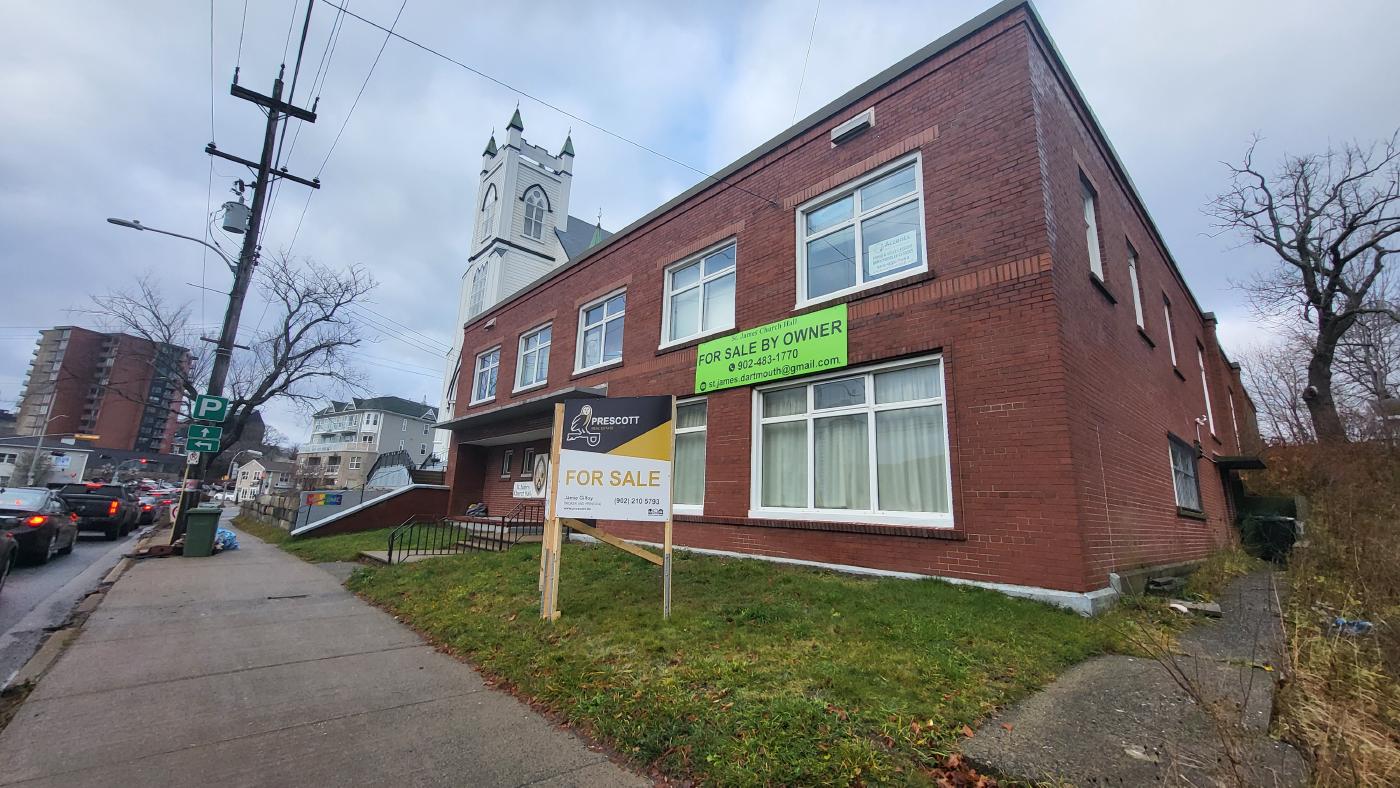
St. James Church Hall is conditionally sold, nearly one year after their call for letters of intent.
The property is listed for almost $1.5 million on Realtor.ca. A church representative, Debra Keays-White, told the Post they cannot yet comment on the sale. However, the congregation received an update on the sale from church leadership at the beginning of October.
Last December, St. James told the Post they were selling the hall because of an interested buyer. The Post has asked the church for updates on the sale over the last year, but so far they have not disclosed many details about the sale process.
The Rev. Catherine MacDonald, then-minister of St. James, told the Post in March that they were working through details with lawyers but nothing had been signed.
In April, the Post spoke with the church’s volunteer realtor, Jamie Gilfoy. At that time, he said they were evaluating the offers that had been submitted to the church. He said things were going well, just slowly.
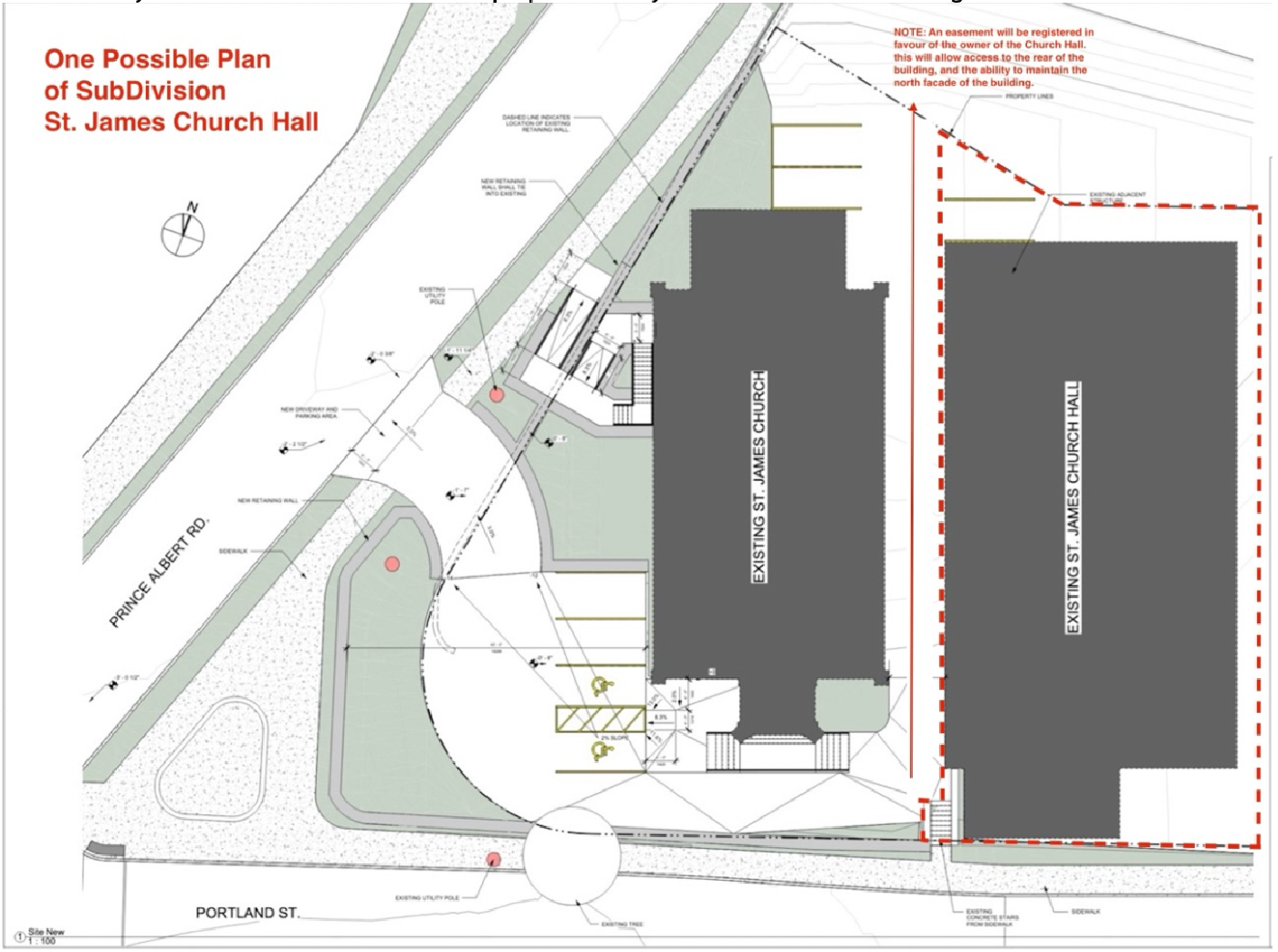
More recently, Gilfoy told the Post that they are getting closer to a sale but there are several complications due to the proximity of the church and hall. For one, the buildings are on the same parcel of land (PID) and need to be subdivided by the municipality. Gilfoy said this is a complex issue because the buildings are very close together.
Another consideration was renovating the church to have its own bathrooms. Online announcements for the church show that they finished this project sometime in the summer.
Meanwhile, the church continues to use the hall, with an upcoming “Christmas Magic!” event on Dec. 5. Their online calendar is still full of bookings for the hall with no obvious end in sight.
What does church property do for a community?
The church stipulated that they wanted a community-minded buyer in their call for letters of intent for the sale. However, with little news about the sale currently available to the public, questions remain around the nature of the sale and how the property may change with a new owner.
To gain some perspective on these types of sales, the Post spoke with Graham Singh, the CEO of Relèven. This organization helps find community-oriented solutions when church properties are for sale. They work with communities, churches, and municipalities to ensure properties continue to offer community value.
Singh said there are 12,000 places of worship in Canada and a total of 17,000 religious properties. About one-third of these places are operating in a multi-year deficit and could close in the next three years.
“You have incredibly well-located historical buildings, often. And you have the nonprofit sector that relies on these properties,” he said.
In Ontario, he said about 800 members of the nonprofit network reported being dependent on religious properties in 2018. In the case of St. James church hall, the space currently serves the community with its food bank and other programming.
Singh said that Relèven has seen a pattern across Anglican, United, Presbyterian, Catholic and Lutheran denominations, as their systems fail: mergers, closure of the church, and then usually sale to a developer.
“And usually what the developer’s interest is, is holding on to the property until it falls apart,” he said
Once the building is unusable, developers have more reason to demolish and build something new.
This is one reason why Singh said he discourages churches from going through the sale process on their own.
“What’s so difficult is some of the most civic-minded churches, like the United Church, sometimes think that because [of their reputation], that all the community organizations will just be able to flood to them and, you know, make a deal,” said Singh.
He said community organizations and nonprofits can rarely get the financing to compete with a developer for these properties. Part of his work at Relèven is to help churches understand what it takes to sell a property to a community-minded buyer.
“They don’t have the skills. They don’t have the perspective,” said Singh, explaining that churches only get to sell their property once. “Once it’s sold its property, it never goes and sells another one, so you have no transferable skills.”
Singh said he wants to see more significant leadership from different levels of society, including municipal governments, to facilitate more thoughtful sales of church properties.
“It is not only the purview of the churches. It’s more than that,” he said.
Church hall a community hub for over 70 years old
In the case of St. James, a church history booklet says the land for the hall was purchased in 1951. Through canvassing and fundraising efforts, the church raised enough money to start building the hall in 1954. It opened in May 1955.
“The possession of this land helped to give strength to a long talked of project and led to one of the biggest achievements in the history of the congregation,” it says, attributing the notes to Ian Forsyth.
The booklet reports that the cost of the hall, a revitalization of the old hall, and upgrades to their heating system totalled about $130,000.
Today, the hall is a well-used community space. There are regular Scouts programs, soccer, volleyball, A.A. meetings, a Japanese school, music lessons, theatrical events, and more.
Gilfoy said that the group handling the sale has been very mindful of the community impact of the hall. Plus, they’ve had advisors, in addition to himself, to help with the process.
“They’re not just looking for the top dollar for price,” he said. “It wasn’t just, ‘Let’s get the money and who cares.’”
He said the church asked all interested buyers about current groups using the hall and their intent of use.
In their Offering Process document, the church notes that a buyer who would allow for community supports – like Scouts and the church’s use of the gymnasium for sales each year – would be considered positively.