
‘Why is Pleasant Street so unpleasant?’
Fall forum invites reflection of neighbourhood amenities, community spaces
If you’ve walked around South Dartmouth, you may have wondered: why is Pleasant Street so unpleasant?
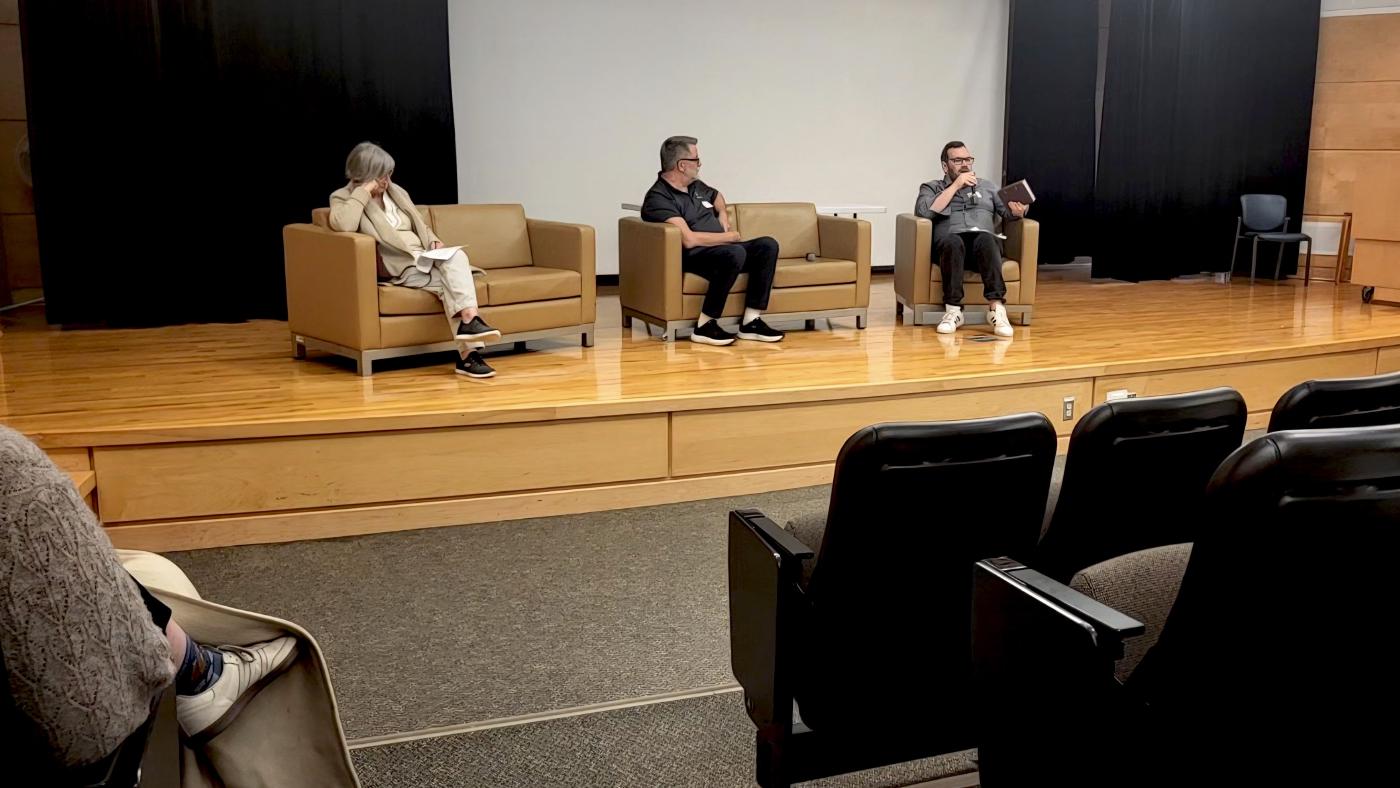
This question resurfaced several times during the Pleasant-Woodside Neighbourhood Association (PWNA)’s Fall Forum on Oct. 28. Around 30 people gathered for a panel discussion and neighbourhood updates at NSCC Ivany campus.
The evening primarily consisted of a panel discussion with three local experts on Dartmouth’s past, present, and future: David Jones, historian and educator, Tim Rissesco, CEO of the Downtown Dartmouth Business Commission, and Jill Grant, a planning professor at Dalhousie. The panel addressed questions related to the lack of third places like coffee shops on Pleasant Street, along with rising pressures affecting retail and food-service businesses across Canada.
Grant spoke about how community infrastructure and planning decisions are changing in our neighbourhoods. She said Pleasant Street primarily functions as a vehicle corridor. While some people use the street to walk to the college or to the hospital, it’s not an attractive place to walk for leisure.
“The neighborhood has a lot going for it,” said Grant. “It’s, I think, successful despite the challenges that you face.”
Rissesco agreed that South Dartmouth has a lot going for it with the hospitals, the community college, the trail, and recreational facilities. But when it comes to Pleasant Street, there are several challenges.
“We’re in a rush right now to build housing,” he said. “I’m wondering, like, are we losing sight of building neighborhoods and building communities, the other assets that we need for that?”
Historian Jones said Dartmouth was considered countryside in the mid-1800s. Wealthy families had estates in Dartmouth, some of which still stand. He said Pleasant Street would have looked very different with a mix of grand houses and farmland.
Most of the old houses and surrounding infrastructure have been replaced.
“I view old houses as an endangered species in Halifax and Dartmouth, and the charm that we talked about is going away,” said Jones.
One resident said that the neighbourhood has a fair number of older houses, but these are getting run down or kept as property investments. They worry the properties will be sold to developers, leading to gentrification.
Later in the evening, Grant MacDonald, board chair of the PWNA, gave an update to the group about several ongoing developments on Pleasant Street.
There are three developments at 171, 181, and 247 Pleasant St. Each will have over one hundred units. MacDonald couldn’t say when any of the buildings would be open to residents. At 221 Pleasant St., the former Sobeys building that burned down still sits empty.
“There’s a few other properties on the Pleasant Street, which are being eyed by people that may build other buildings,” said MacDonald.
Opportunities to shape community
Throughout the evening, people brought up many ways the community could invest in itself.
Planning instructor Grant said neighbourhoods used to be built around schools. As neighbourhood schools have closed and been consolidated, it’s left communities without an anchor at the core. Planners have looked to commercial spaces as possible anchors, but this has not always been successful.
Jacqueline Reed, new principal of Dartmouth South Academy, gave an update about the school and said kids and parents are looking for more ways to connect.
“The more I talked to people, they were like, we just want to be together. And our families were craving that same thing,” she said.
With 636 kids, 80 staff, and around 1,500 family members, the school community makes up a significant portion of the neighbourhood. Reed said she is very open to suggestions to bridge the school community with the neighbourhood.
Someone in the audience said the North Woodside Community Centre brings a lot of value to the neighbourhood that isn’t always recognized. It’s quite active and provides popular services to the community. Another person said the centre could use investment to keep up with demand.
For Pleasant Street, the group discussed different beautification programs and placemaking ideas that could improve walking through that area.
District 3 Councillor Becky Kent mentioned the city’s placemaking grants as a potential way to help areas like Pleasant Street. The neighbourhood has already successfully made an application to this grant for the paths at the top of Esson Road.
Rissesco mentioned that there is a fair amount of public land in Dartmouth that could be used for land trusts or cooperative housing investments. He said it’s up to the people to pressure governments to make those kinds of projects happen.
Local MLA Claudia Chender agreed that there are opportunities for non-market housing if people want to advocate for that. Build Nova Scotia has some land close to Dartmouth Cove, an area that will likely see development in the near future. She said they haven’t announced plans for that land yet, so there could be opportunities to influence what the province does there.
Similarly, Rissesco said now is the time to be vocal about what the community wants to see happen to the downtown waterfront as planning is ongoing.
Sam Austin, councillor for Dartmouth Centre, said the city is reviewing bike network options between Alderney Gate and the bridge. He welcomed anyone to get in touch with feedback.
A group associated with the PWNA is working to create consistent upkeep to the Harbourfront Trail. Since the path crosses several different land boundaries, they are coordinating between the different landowners to make this happen.
A lot is happening in the neighbourhood and through the Fall Forum, the PWNA invited residents to consider how they can help shape the community into something the people want it to be.
Brian Foster, PWNA board member (who also serves as publisher for the Post), said to contact them if anyone says ‘Wouldn’t it be nice?’ about the neighbourhood.
“We’re suckers for a good idea,” he said.
The Pleasant-Woodside Neighbourhood Association can be reached at pleasantwoodside@gmail.com.