
South Dartmouth housing solution could be a classroom problem
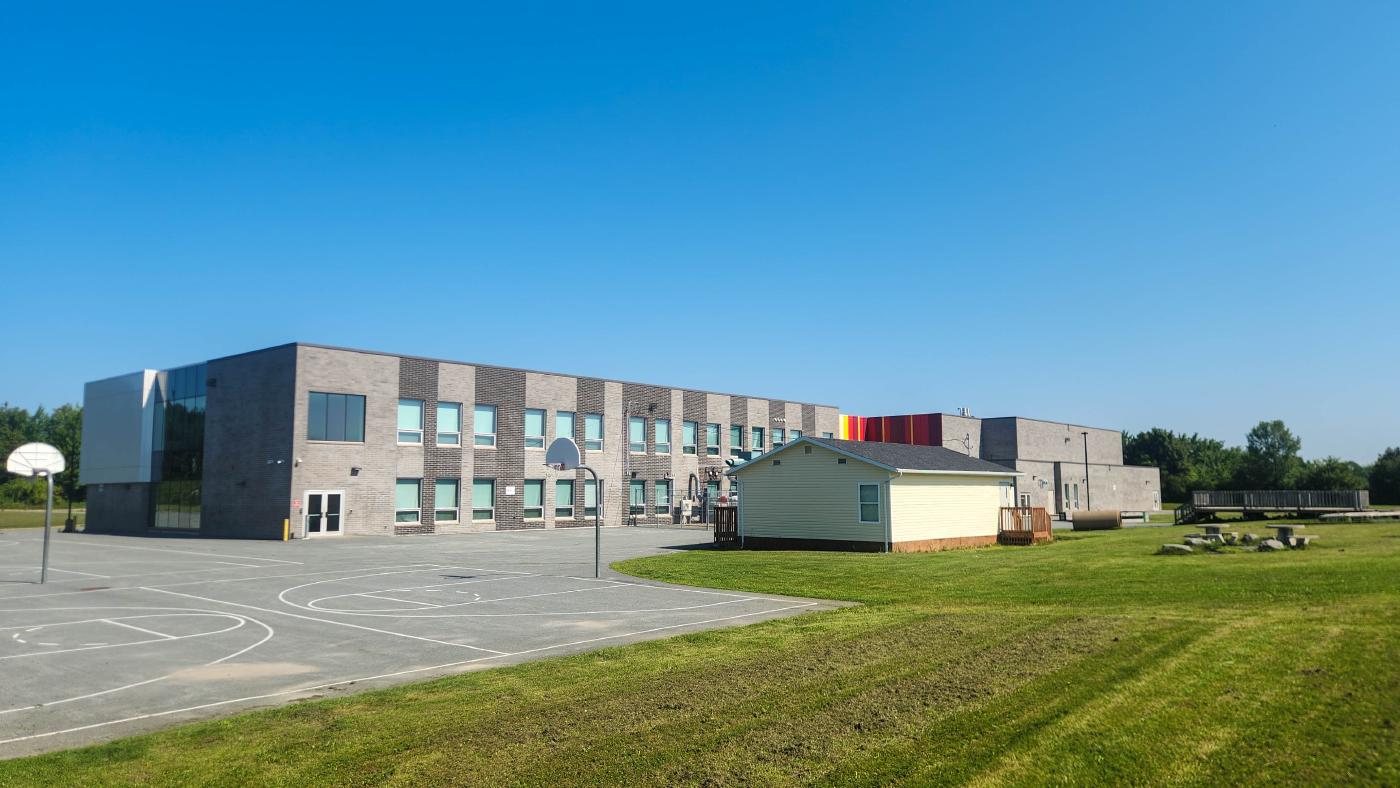
There’s a portable classroom behind the Dartmouth South Academy (DSA). A vinyl-clad trailer like a temporary office on a construction site. The classroom’s tiny size would make it quaint in another setting; a modern, one-room schoolhouse in a town without a post office in one of the country’s quieter corners.
From the outside, the classroom looks like a comfortable enough place to study, but it’s sitting a few metres away from an enormous P-9 school that’s less than a decade old, raising questions about planning in a city that’s experiencing record growth.
The portable classroom appeared during the summer of 2024, after the province approved an 875-unit housing development marketed for its walking distance to the school’s front doors. When the new classroom was announced, HRCE’s director of operations wrote school families to explain that the move was “required to help ease enrolment pressures.”
DSA was built with room to grow. The school operates with capacity for 690 students, down from the 730-student capacity cited by the building’s architect when it opened in January 2018. The neighbourhood enrolled 457 students at the beginning of that school year, before the academy opened, according to the Halifax Regional Centre for Education (HRCE).
Enrollment peaked in 2024 at 99.4 per cent when 686 students enrolled at DSA, less than six years after opening. Student numbers dropped back to 639 in September of 2025.
Dartmouth’s population grew from 114,724 in 2021 to 125,210 in 2025, an increase of 9.1 per cent in four years, according to the Halifax Partnership’s 2026 Halifax Index.
Halifax Regional Municipality grew 3.3 per cent between 2011 and 2016, then accelerated between July 2021 and July 2022 when the city added 20,713 new residents. The 4.5 per cent increase surpassed previous record highs for the growth rate and absolute growth, before slowing to a 1.5 per cent annual rate over the most recent 12-month period.
As three levels of government scramble to address the housing crisis plaguing the growing region, Claudia Chender, MLA for Dartmouth South and leader of the Official Opposition, said there is no clear mechanism to ensure school capacity keeps up with these numbers.
“I have been advocating for a more transparent system so communities can see how these decisions are being made and have confidence that school infrastructure is keeping up with growth,” Chender told the Post. “This is even more important with the introduction of Special Planning Areas which allow fast tracking of housing without regards for social infrastructure like schools, grocery, and healthcare.”
HRCE works with government partners as part of long-range planning, said Lindsey Bunin, a representative with the centre.
“While we consider planned residential growth in our enrolment forecasting, decisions related to land-use planning, development approvals, and Special Planning Area designations fall outside HRCE’s mandate,” Bunin told the Post.
HRCE’s forecasting and development hasn’t been consistent with the reality of growth at DSA. The centre’s long-range outlook projected enrolment would reach 755 students in 2024 and 847 by 2025, well past the school’s limit. Actual enrolment at DSA was lower by nine per cent in 2024 and 25 per cent in 2025. Dartmouth High missed its projections by similar margins, forecasting 1,044 and 1,190 students against 987 and 1,010 enrolled.
“As part of our regular planning processes, HRCE continually monitors enrolment, demographic trends, residential development and other factors that may influence future student populations,” Bunin said. “Long-range planning is an ongoing process, and projections are reviewed and updated as new information becomes available.”
Projections are based on the best information available at the time, but like any forecast they can vary based on construction timelines, housing occupancy rates, migration patterns, and family choices, Bunin said.
Even with lower enrolment than projected, DSA is poised to see its capacity tested. More than 400 residential units are under construction permit in Dartmouth South, with further developments planned nearby.
The province designated Halifax Regional Municipality (HRM) as an interim planning area in October to remove barriers to residential development.
“There’s a critical need for housing in Halifax,” said then-Municipal Affairs Minister John Lohr. The orders will allow development to begin in key suburban areas targeted for growth, he said.
More than 60,000 new homes have been fast-tracked in Nova Scotia, including two developments in Chender’s district: the 875 units at Mount Hope Village near DSA, and a second project with 905 units at Opal Ridge.
When Nova Scotia announced four new schools in September 2024, Chender said she was disappointed her riding was omitted despite HRCE having flagged the area as a growth priority in 2022, before the school almost reached capacity in 2024 and ahead of the current wave of construction.
The province added two more schools for “high-growth areas of Dartmouth and Bedford” to its five-year capital plan in February 2025. No site or catchment has been named.