
Homeless seniors find privacy, community at Dartmouth pallet shelter village
Since opening in 2024, Ron Cooper Village has helped more than three dozen seniors secure permanent housing, offering stability and a sense of connection many had lost while experiencing homelessness.

When David Lague talks about life at Ron Cooper Village, the word he returns to most often is peaceful.
“The living area here is quiet and peaceful,” said Lague, who has lived at the Dartmouth shelter village for about a year. “Everybody’s just relaxed and at peace.”
For the 68-year-old resident, that sense of calm comes from having a space of his own – a small shelter unit equipped with a bed, storage space, heating, air conditioning, and enough room for a television and small fridge.
“I can sit on my bed with my back against the wall. I’ve got two windows, one in front of me and one behind me,” he told the Post. “I can open them up when it’s nice out, and I can sit and have fresh air, watch TV, and if anybody wants me, they just yell out my name, and I just go up and see them.”
A few units away, another resident, who asked to be identified only as M., describes the village less as a shelter and more as a community.
“It’s just been really like a small village of unexpected people thrown together,” she said. “We eat together. We live within six feet of each other.”
For both residents, the village has offered something difficult to find while experiencing homelessness: stability.
Located on Atlantic Street in South Dartmouth, the Ron Cooper Village, a 41–unit transitional shelter village operated by the Atlantic Community Shelters Society (ACSS), opened in September 2024, and was created specifically for people aged 50 and older experiencing homelessness. The site combines private Pallet-brand shelter units with housing support, health services, and community programming designed to help residents transition into permanent housing.
The village was named after Ronald Cooper, a longtime Cole Harbour councillor, community volunteer, and advocate.
According to staff at the village, the project reflects a vision Cooper championed during his lifetime.
“His whole belief was that having a home was really important. And his vision was that there be some kind of village specific to seniors. So it was kind of his dream,” said M.J. Hampton, executive director of ACSS.
That vision emerged at a time when Nova Scotia was seeing a growing number of adults fall into homelessness.
“At that point in time, we were seeing increased numbers of individuals living unsheltered in encampments and in very precarious situations right across the province,” said Jamie Smith, executive director of the Homeless and Supportive Housing unit with Nova Scotia’s Department of Opportunities and Social Development.
The province’s response came through its Supportive Housing Action Plan, which included investments in emergency shelters, supportive housing, and transitional shelter villages such as Ron Cooper Village.
While homelessness affects people of all ages, staff at the village said older adults often arrive with challenges that require a different approach.
“Seniors have a different set of needs than other people who are experiencing homelessness,” said Lori Wilson, who works in housing stability and community integration for ACSS.
Those needs often include more frequent medical care, mobility concerns, and assistance navigating increasingly complex government and housing systems.
“There’s a lot more health challenges,” said Louis St. Germain, who manages community connections at ACSS. “Sometimes when it comes to independence, they need help with their daily activities at times. And they need frequent medical care.”
Staff said those realities helped shape how the village operates.
Unlike traditional congregate shelters, residents live in individual shelter units. The model was initially chosen because it could be built quickly during a period of rising homelessness, but staff said the privacy it provides has become one of its greatest strengths.
“The perks of privacy have been huge,” said Wilson.
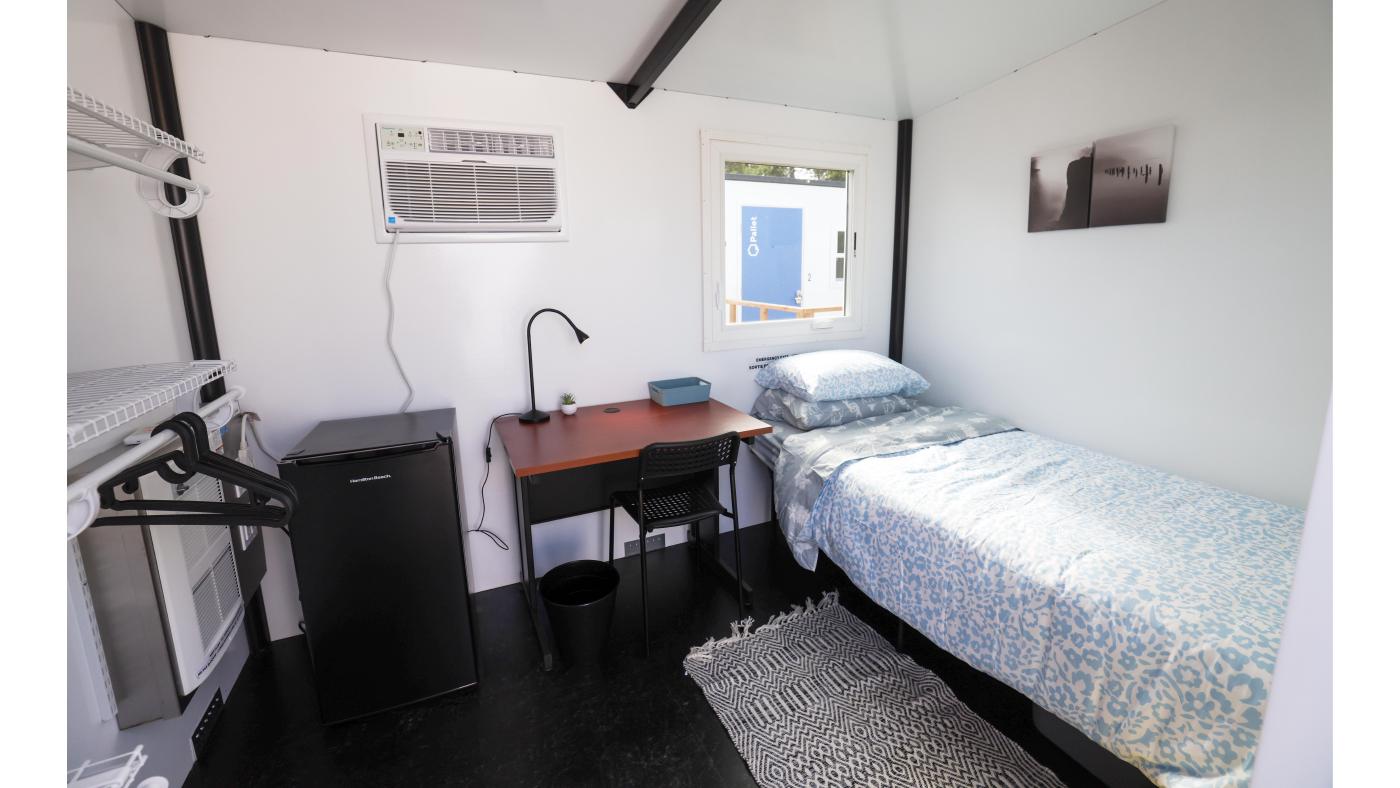
“That’s unusual in shelters,” St. Germain added. “You can close your door. There are few places where, when you’re experiencing homelessness, you can have that level of privacy.”
For M., privacy matters, but so does the community that has developed around the village.
“Any time anybody’s been sick or somebody’s fallen, immediately a concern goes out, and people immediately also look out for each other,” she said. “It’s supportive in a really important way when you’re getting old.”
Lague has found something similar. He now works daytime security shifts and said part of what motivates him is the chance to give back.
“I like helping people. I’m being helped, so I like being able to help them,” he said.
For Lague, everyday experiences like working the front gate have helped create a sense of belonging.
“You also get a chance to talk to people your own age who understand where your mind is at,” he said. “It’s nice to have somebody you can talk to, who has also lived that portion of their lives, and are now in the retirement moment, so to speak.”
Staff said building that kind of connection is an important part of community life, which they support through regular activities, shared meals and informal conversations.
“We put a lot of effort into being visible so that people are comfortable coming to us,” said Wilson.
Residents have access to housing support workers, health-care services, tax clinics, mental health and addictions outreach, foot-care clinics, and guidance on government programs.
Much of that work focuses on helping residents secure and maintain permanent housing. The goal, staff said, is not simply to move people into housing, but to ensure they remain there successfully.
“It’s no good to just find them a place and say goodbye,” St. Germain said. “You have to stay in touch and make sure that they’re well taken care of.”
The results of support are visible inside the village. A display known as the “Tree of Keys” features keys bearing the names of residents who have moved into permanent housing. The display now holds 37 keys.
For provincial officials, those individual success stories are part of a broader effort to reduce homelessness across Nova Scotia.
Smith said in the most recent budget, they received funding for an additional 376 supportive housing units and are working with partners to determine where those developments will be located.
“We’re also working towards a system where homelessness is rare, brief, and nonrecurring,” she said.
At Ron Cooper Village, that goal is measured not only by the number of people who move into permanent housing, but by what happens while they are here.
Residents share meals, check in on one another and slowly rebuild the sense of community that homelessness can strip away.
“It’s kind of like a dysfunctional family,” M. said with a smile.