
Dartmouth radio club bridges community and emergency communications
Longtime operators keep a century-old hobby alive while standing at the ready for catastrophic telecommunications failures.
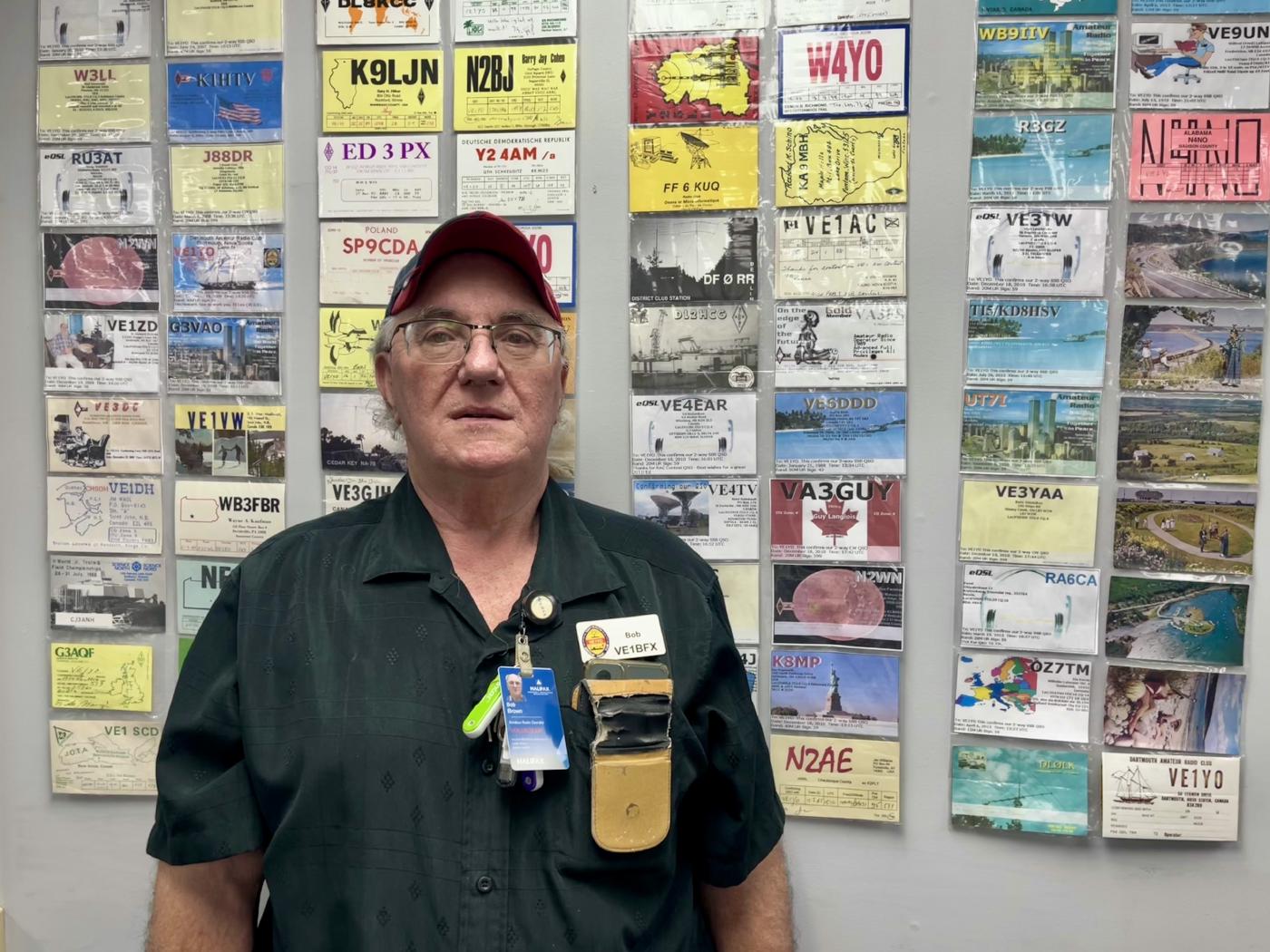
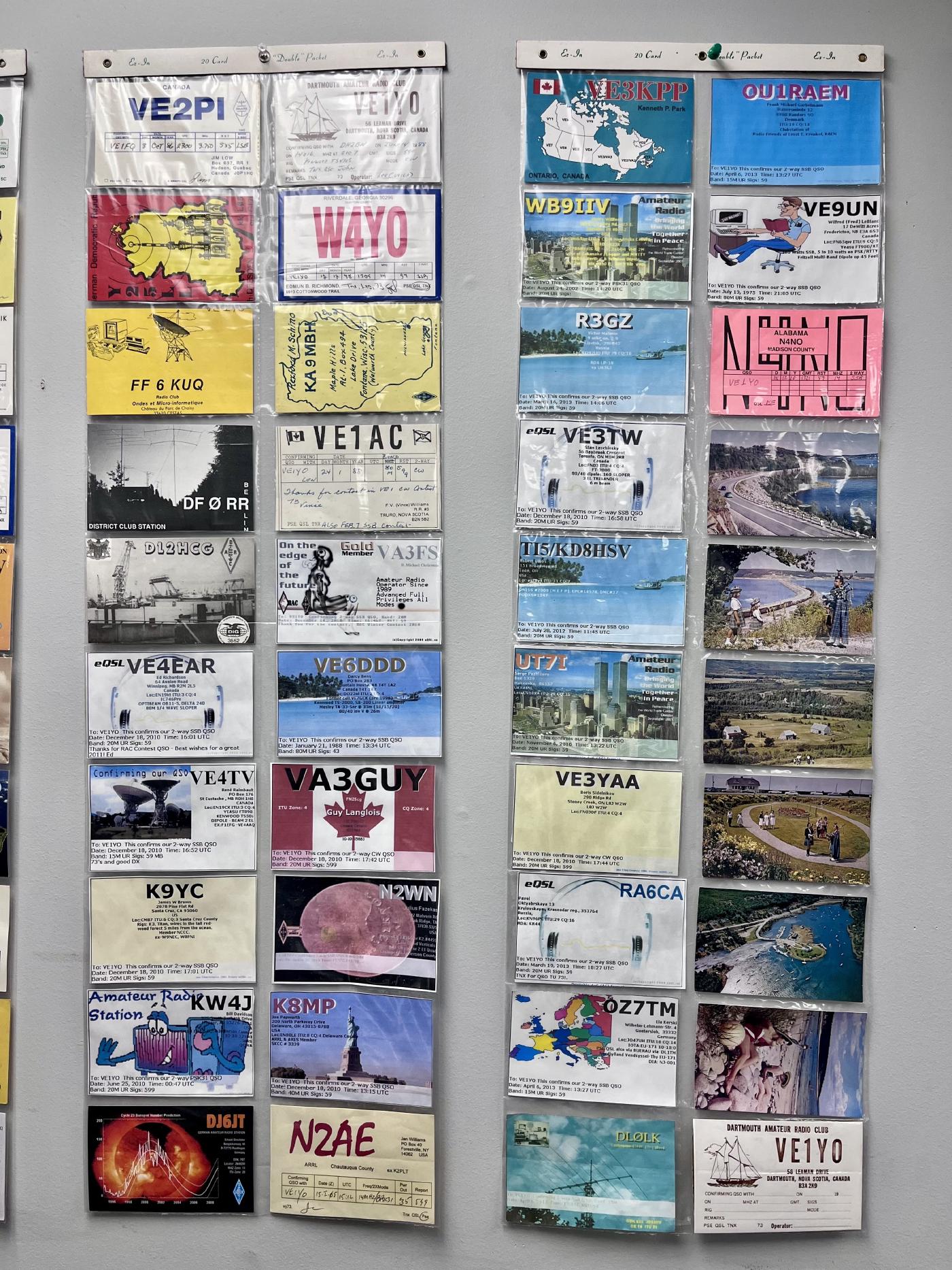
Inside a small room tucked away in Dartmouth’s Eric Spicer Municipal Building, a low electronic hum rises from radio equipment stacked beneath shelves of weathered manuals and tangled wires. Colourful QSL cards – postcards exchanged between radio operators to confirm contact – cover the walls alongside maps and photographs of club members. It is a space that feels frozen in time, but the work done here still matters in a world where modern communications can fail without warning.
Known by its call sign VE1YO, the Dartmouth Amateur Radio Club traces its roots back to the 1920s. Today, members gather every Saturday morning for coffee, conversation, and a hobby that many believed would disappear with the rise of smartphones and the internet.
Instead, amateur radio remains both a tight-knit community and an important backup should current communication systems go down.
The club shares the Spicer building with the Halifax Regional Municipality Emergency Management Organization, functioning as a backup communications network during emergencies. Members regularly test equipment, maintain repeater systems, and participate in emergency exercises designed to keep communications running if phone or internet went down.
If that sounds far-fetched, the club has seen it happen – and in recent memory.
“[It] took out the entire 9-1-1 circuit for the whole Maritime provinces,” long-time member Bob Brown told the Post, recalling a 2017 telecommunications blackout. “We were all on standby.”
For Brown, who has spent decades involved in amateur radio and emergency communications, incidents like this underscore the importance of having reliable backups in place.
It was in the ’70s when a teenage Brown first caught the amateur radio bug from two adventurous but fictional peers: The Hardy Boys. Series entries like 1945’s The Short-Wave Mystery featured ham radio operators, including the mystery-solving boys themselves (imaginary and nonsensical call sign VN16J).
His interest in electronics eventually led to a career working in the Halifax dockyard, and later with the Canadian Coast Guard, where he spent nearly three decades working on ships.
Even while at sea, amateur radio remained part of Brown’s daily life. One memory that still stands out to him is sending a telegram from the Arctic.
Brown had been stationed aboard the CCGS Louis S. St-Laurent, a heavy icebreaker still in service. A fellow crewman had just learned that crew changes would prevent him from getting home in time for an important event.
“‘I’m supposed to be home next week for a wedding,’” Brown recalled the crewman telling him. “Well, can you send a telegram?’”
At the time, Brown was studying commercial radio operation. He agreed, and ended up sending what he remembers as the last official telegram transmitted from the ship.
Back in Dartmouth, Brown became heavily involved in the local amateur radio community, volunteering during search-and-rescue operations, helping during events, and conducting licensing exams.
Brown said the culture surrounding amateur radio has also changed significantly over the years. “It used to be an old boys’ club,” he said. “Now it doesn’t matter.”
In fact, the organization has been working to attract younger members through licensing support, outreach programs, and events like Jamboree on Air, where Scouts and youth groups can speak with radio operators from around the world.
Club members also participate in annual events like Field Day, where operators set up portable radio stations outdoors and simulate emergency conditions while attempting to contact as many operators as possible around the world.
According to Brown, these events reflect what amateur radio has always been about: staying connected through direct human conversation. And in a world dominated by social media algorithms and AI chatbots, this “more personal” connection offers a sense of community he finds increasingly rare.
For those craving that kind of community, the hobby remains surprisingly inclusive and easy to get into, Brown explained.
“If you can read and write, you can get a licence,” he said.